What Does Family Style Italian Dining Mean?
Family style Italian dining isn't just a service model. It's a philosophy wrapped in marinara and passed around the table. Most people think it's about big portions or sharing plates, but the IRS—wait, wrong topic—the tradition sees more than that. It's about how food moves, who controls the flow, and whether anyone's hoarding the meatballs.
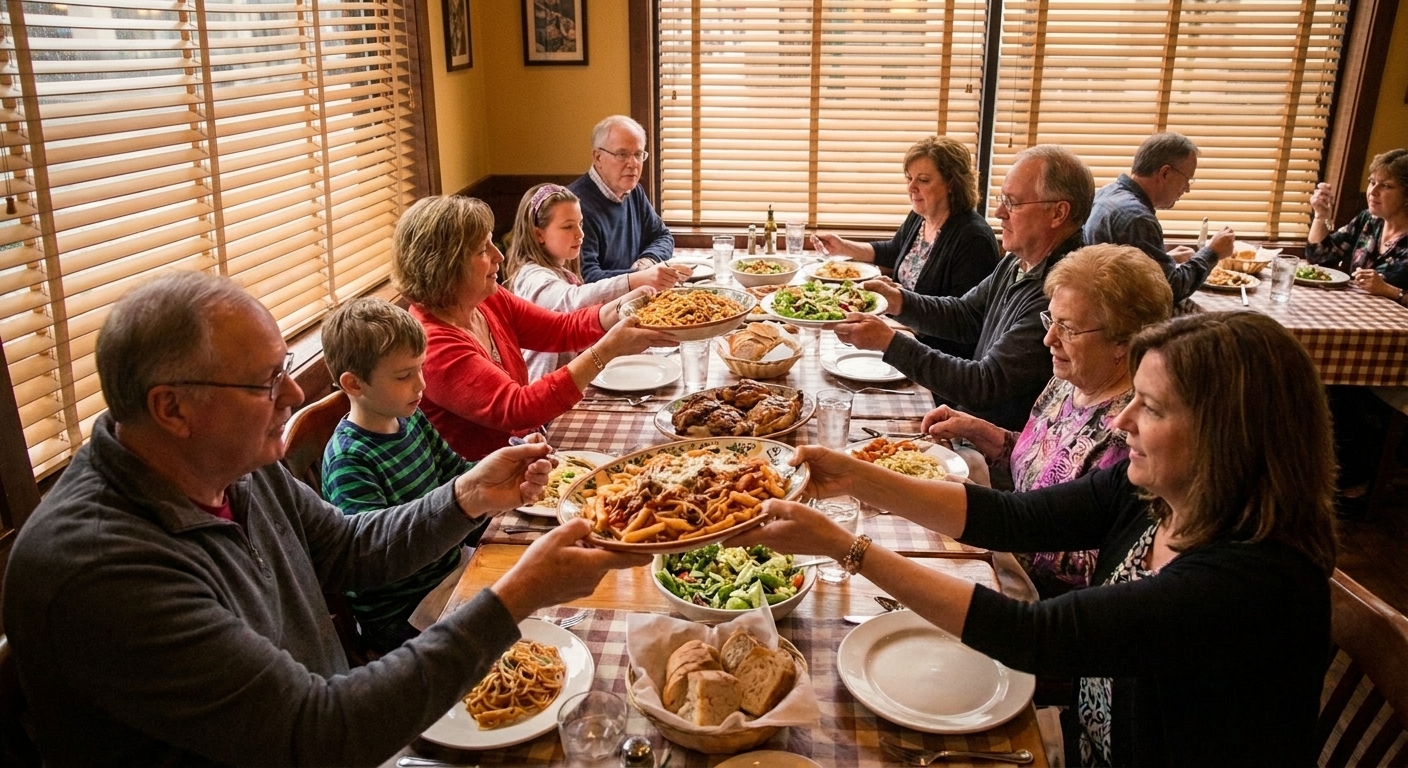
Here's the reality. If you're sitting down to an Italian meal served family style, you're not ordering for yourself. You're committing to a communal experience where every dish lands in the middle, and everyone's responsible for making sure it circulates. No individual plates. No personal claims. Just platters, bowls, and the understanding that what's on the table belongs to everyone—until it's gone.
Platters Replace Personal Plates
Walk into a family style Italian restaurant and you won't see a waiter delivering separate entrees to each seat. Instead, the kitchen sends out large-format dishes meant to feed the group. Pasta comes in a bowl big enough to serve six. Chicken parm arrives on a platter with enough cutlets for the whole crew. Vegetables, bread, salad—it all hits the center of the table.
This setup changes the entire rhythm of the meal. You're not waiting for your dish while everyone else eats. You're all digging in at the same time, passing bowls, negotiating who gets the last piece of garlic bread. It's organized chaos, and it works because everyone's invested in keeping the flow moving. The moment someone stops passing, the whole system stalls.
Courses Stack Up Without the Wait
Italian meals don't rush. Even when served family style, the structure holds. You'll typically see multiple courses roll out in sequence, each one designed to build on the last. Antipasti kicks things off—cured meats, cheeses, olives, maybe some roasted peppers. Then comes the primo, usually pasta or risotto. After that, the secondo arrives with protein and sides. Dessert closes it out, assuming anyone has room left.
The beauty of family style is that you control your own pacing within that framework. Want more pasta before the chicken shows up? Go for it. Need a breather between courses? Take it. The food's there when you're ready, and no one's rushing you to clear your plate before the next round.
What Lands on the Table
The dishes themselves vary depending on the restaurant or the family running the kitchen, but certain staples show up again and again. Here's what you're likely to encounter:
- Antipasti spreads with cured meats, marinated vegetables, and cheeses
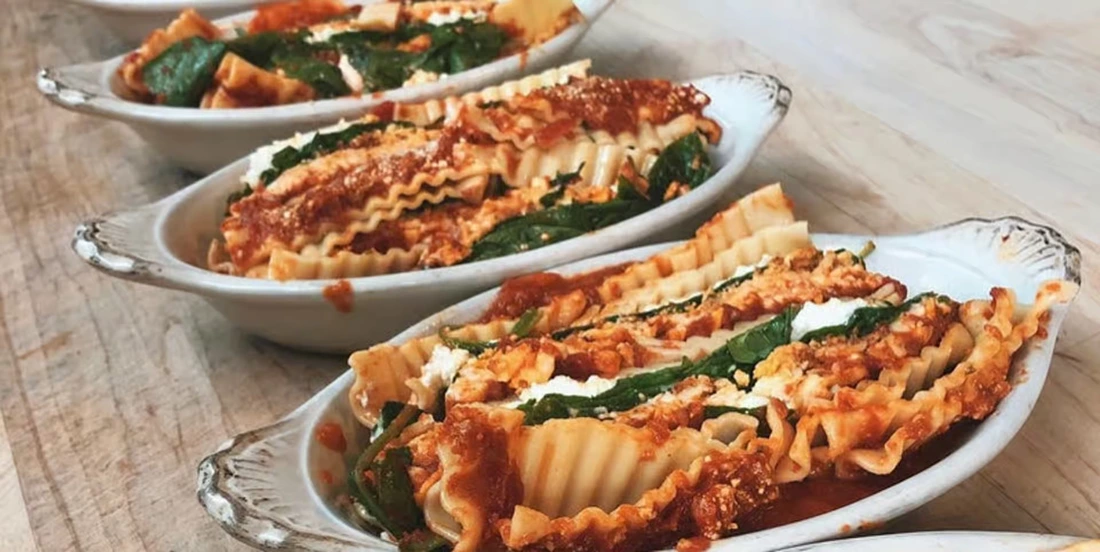
- Pasta dishes like rigatoni, penne, or spaghetti with red or white sauces
- Protein platters featuring chicken, veal, sausage, or fish
- Vegetable sides like sautéed greens, roasted peppers, or eggplant
- Bread baskets that never seem to empty
Sharing Isn't Optional
You can't claim a dish in family style dining. The moment you try to park a bowl in front of your seat and defend it, you've missed the point. Everything circulates. Everyone samples. If you want seconds, you wait your turn or politely ask for the platter to swing back around.
This approach forces a level of awareness most dining experiences skip. You're not just thinking about what you want—you're watching what others are taking, adjusting your portions, making sure the person at the far end gets a shot at the good stuff. It's low-key negotiation disguised as dinner, and it only works when everyone plays along.
Why Restaurants Lean Into This Format
From a business perspective, family style service makes sense. Kitchens can prep larger batches instead of plating individual orders. Servers spend less time running back and forth with separate dishes. Tables turn slower, but the experience feels more substantial, which justifies higher per-person pricing.
For diners, the appeal is variety without commitment. You're not locked into one entree. You get to taste multiple dishes, compare flavors, and build your own meal from what's available. It's especially effective for groups where preferences vary—someone wants pasta, someone else wants chicken, and the vegetarian needs options. Family style covers all of it without forcing anyone to compromise.
The Etiquette No One Explains
There are unwritten rules, and breaking them will get you side-eye from the table. Here's what keeps the system running smoothly:
- Pass dishes in one direction to avoid collisions
- Serve yourself reasonable portions so others get a chance
- Don't hover over a platter—take what you need and keep it moving
- If you finish a dish, offer to request more before it's completely empty
- Keep your phone off the table so platters have room to land
When It Works Best
Family style Italian dining thrives in group settings. Parties of four or more hit the sweet spot—enough people to justify the variety, but not so many that coordination falls apart. Smaller groups can make it work, but you'll end up with leftovers or a limited selection. Larger groups risk turning the table into a logistics puzzle where half the people never see the good dishes.
It's also ideal for celebrations or gatherings where conversation matters as much as the food. The shared format keeps everyone engaged, creates natural pauses for talking, and eliminates the awkwardness of some people finishing while others are still waiting for their order.
What Separates Good from Great
Not every restaurant nails family style service. The best ones understand timing—they don't dump all the food at once, but they also don't make you wait twenty minutes between courses. They portion dishes appropriately for the table size, so you're not drowning in pasta or fighting over scraps. And they staff servers who know when to refill, when to clear, and when to leave the table alone.
The food quality has to hold up too. When you're serving large-format dishes, there's nowhere to hide. A mediocre sauce gets magnified when it's sitting in a bowl for ten people to critique. Fresh ingredients, proper seasoning, and consistent execution matter more in family style than in individual plating, where garnish and presentation can carry some weight.
How to Approach Your First Family Style Meal
- Show up hungry but pace yourself through the courses
- Ask the server how much food typically feeds your group size
- Start with smaller portions so you can try everything
- Communicate with your tablemates about what to order
- Don't be the person who takes the last piece without asking
The Cultural Roots That Built This Tradition
Italian family meals have always centered on abundance and togetherness. Historically, households gathered around one table, and the food came out in waves—whatever was ready, however much there was. No one got a custom plate. You ate what was served, and you shared it with whoever showed up.
That mentality carried over into restaurants, especially in Italian-American communities where large families and multi-generational gatherings were the norm. Family style service became a way to replicate the home experience in a commercial setting, preserving the communal vibe while scaling up the operation.
Bringing the Table Together
Family style Italian dining works because it strips away the transactional nature of most restaurant meals. You're not just ordering, eating, and leaving. You're participating in something that requires coordination, patience, and a willingness to share. The food's better when it's passed around. The conversation flows easier when everyone's engaged in the same rhythm. And the meal sticks with you longer because it wasn't just about what you ate—it was about who you ate it with and how the whole thing unfolded. That's the part most people remember, long after the last piece of tiramisu disappears.
Ready to Share a Meal?
Let’s make your next gathering unforgettable with the warmth and flavor of true family style Italian dining. We’re here to help you bring everyone together around the table—just give us a call at 503 239-5221 or order online and let’s start planning your feast today.
‹ Back
Recent Posts
-
What Does Family Style Italian Dining Mean?
July 21, 2026
-
How To Know If An Italian Restaurant Is Authentic?
July 7, 2026
-
Does Portland Have Michelin Star Italian Restaurants?
June 23, 2026
-
-
What Are Portland's Hidden Gems For Italian Food?
May 26, 2026